One of the most common questions I am asked is “How long does it take to do a molar?” Before this post is over, I’ll make sure I answer that question. Fact is, it varies. Much like driving your car to a specific destination, there are a number of factors that can affect your transit time.
How familiar are you with where you are going?
Experience is helpful when dealing with complex cases.
How is traffic?
Ease of negotiation of canals to the terminus is highly predictive of treatment time. Retreatment may also add time to the length of the procedure.
Are there any accidents on the way?
The occurrence of procedural errors can add time to the length of the procedure.
Do you have passengers who will require a stop?
Patients will often dictate how much treatment they can or will accept. Some cannot open for long periods of time, some have difficulty with multiple visits.
Are you aware of alternate routes to your final destination?
When procedural difficulties arise, how easily are you able to manage it?
How fast are you comfortable going?
This is individual for each provider. Some people operate quickly, others less so.
Is this a single or multiple day trip?
Indications for single or multiple visit endodontic therapy are always a consideration.
Will the car start right away?
Anesthesia can add time to the length of a procedure. Particularly when dealing with a lower posterior tooth with an irreversible pulpitis.
The following case was recently completed in my office. Necrotic pulp, symptomatic apical periodontitis #31. I didn’t complete the case in a single visit, nor did I complete the case as quickly as I possibly could have. The case was medicated following the first visit with Calcium Hydroxide and an orifice barrier was placed at the time of obturation.
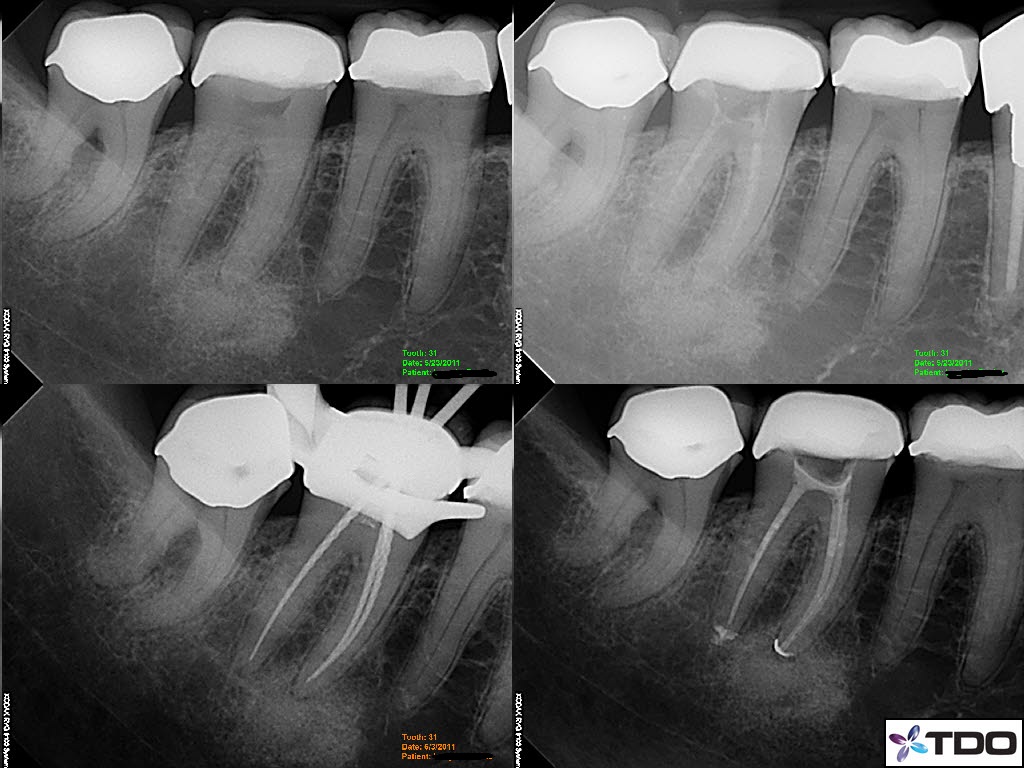
So how long does it take to do a molar…
As long as it takes to do it right.
